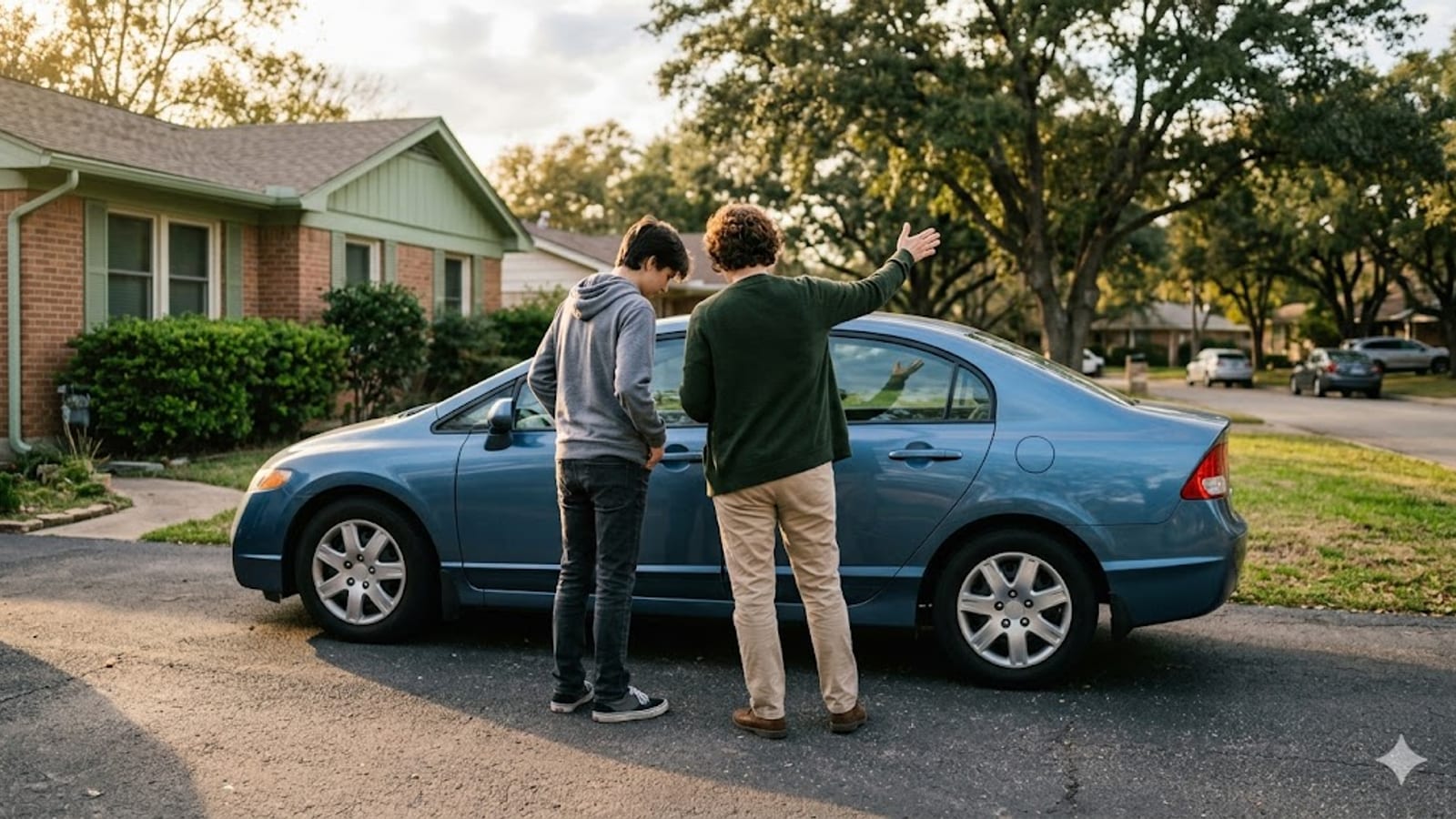
Parents as Driving Coaches: What the Evidence Says Works
During the learning-to-drive years, parents are the most influential safety factor a teen has. Here's how to use that role well — backed by research.
By Drive Smart Academy Team
In the graduated-licensing era, the most important “instructor” most teens have isn’t a driving school — it’s a parent or guardian. Research on programs that coach parents to stay involved (such as Checkpoints-style interventions) has found that sustained parental engagement is one of the strongest available levers on new-driver safety.
That’s both reassuring and a little daunting. Here’s what the evidence suggests actually helps.
Set rules — and write them down
Teens of parents who set and enforce clear limits during the early-driving period tend to take fewer risks. The most effective approach researchers have studied is a parent-teen driving agreement: a simple written contract covering the conditions that the data flags as risky.
A good agreement usually addresses:
- Passenger limits in the early months
- Night-driving curfews
- Phone and distraction rules
- Seatbelts, every trip, no exceptions
- Weather and highway conditions to ease into gradually
- Consequences — and how privileges are earned back
Writing it down does two things: it makes expectations explicit before conflict arises, and it shifts the dynamic from nagging to a prior agreement.
Coach the right things
- Supervise widely, not just often. Deliberately cover night, rain, highways, and heavy traffic during the permit period — not just easy daytime errands.
- Stay calm. A composed coach who debriefs gently produces more learning than one who reacts sharply to every mistake. Fear shuts down learning.
- Talk about the “why.” Explaining the reasoning behind a rule (“passengers are the single biggest early risk”) earns more buy-in than “because I said so.”
- Loosen gradually. Add privileges step by step as the teen demonstrates judgment, rather than flipping from fully restricted to fully free at the license date.
Model what you teach
This is the uncomfortable one. Teens absorb the driving culture they grow up in. A parent who speeds, checks a phone at red lights, or skips the seatbelt on short trips is teaching that, regardless of the rules they set. The most credible coaching is consistent with the coach’s own behavior.
The takeaway from the research is encouraging: you don’t need to be a professional instructor to make a measurable difference. Clear rules, calm coaching, wide-ranging practice, and good modeling are within any family’s reach — and they’re exactly what the evidence rewards.
Sources & further reading
Was this helpful?
Thanks — your feedback helps us improve.
Learn to drive the smarter way.
Real-road scenarios, a permit prep that actually sticks, and a parent dashboard that keeps everyone on the same page.
Get early accessKeep reading
Does Driver's Ed Actually Reduce Crashes? What the Research Really Shows
The honest answer is more interesting than yes or no. Decades of research reveal why traditional driver's ed disappointed — and what modern programs do differently.
Research & LearningThe Teenage Brain Behind the Wheel: What Neuroscience Tells Us
Teen driving risk isn't just inexperience — it's developmental. Here's what brain science says about why, and why that's a reason for structure, not despair.
Research & LearningWhy 50 Hours? The Case for Lots of Supervised Practice
Most states require dozens of hours of supervised driving before licensure. The number isn't arbitrary — and how you use those hours matters as much as hitting it.