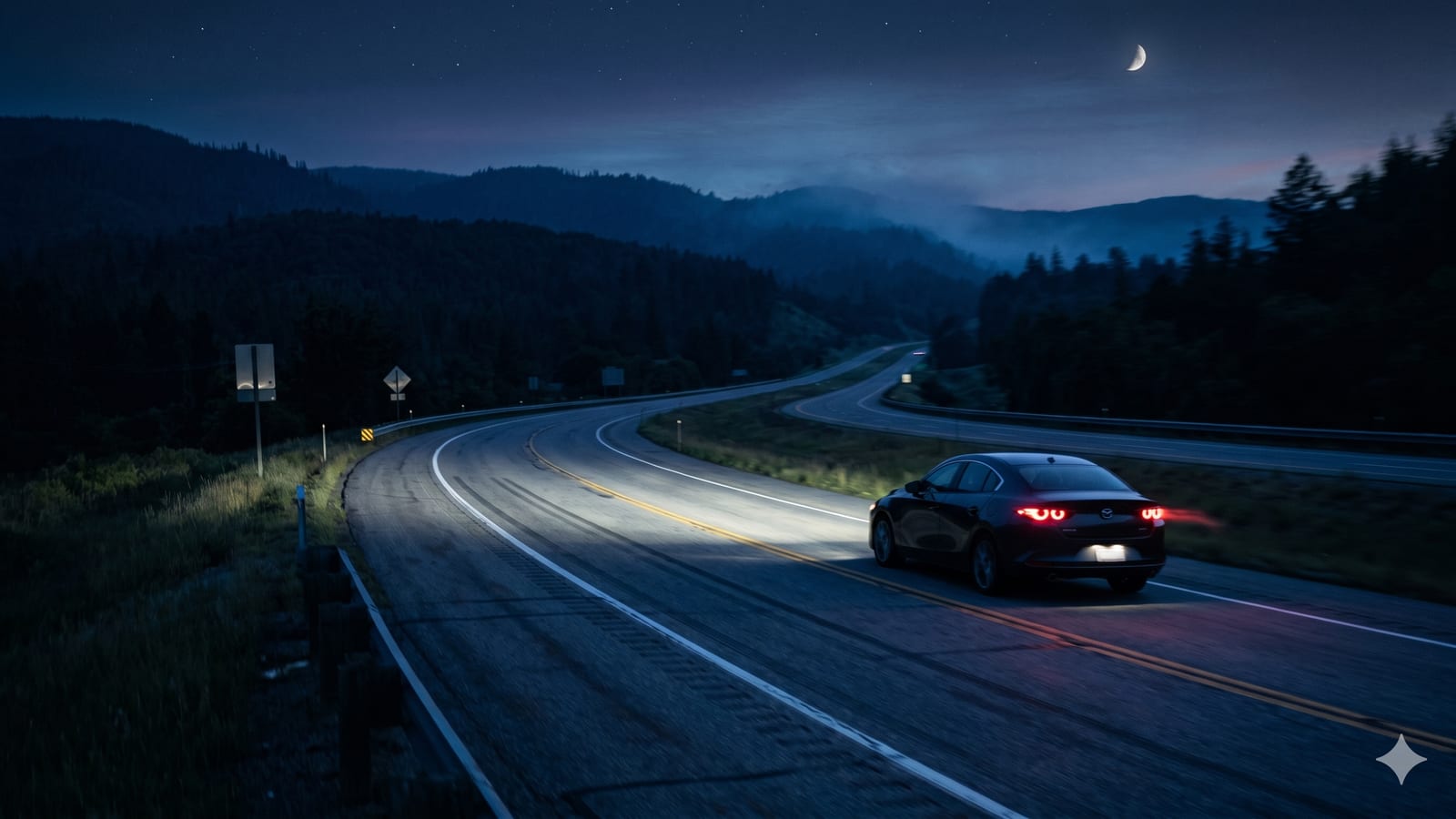
Night Driving: The Hidden Danger in Teen Crash Statistics
Far fewer miles are driven at night, yet a disproportionate share of fatal teen crashes happen after dark. Here's why — and how to build the skill safely.
By Drive Smart Academy Team
Most driving happens during daylight. Yet when researchers look at where fatal teen crashes occur, nighttime is dramatically overrepresented. Per mile driven, the after-dark fatal-crash risk is higher for every age group — and highest of all for inexperienced drivers.
This is why nearly every state’s graduated-licensing program includes a nighttime driving restriction for new drivers. It’s one of the most consistently effective rules on the books.
Why darkness is so demanding
Night driving isn’t just “the same task with the lights off.” Several things stack up at once:
- Reduced visibility. Headlights reveal far less of the road than daylight, and hazards appear later. Depth perception and peripheral vision both degrade.
- Harder hazard detection. Pedestrians, cyclists, and animals are much harder to spot, and there’s less time to react when they appear.
- Glare. Oncoming headlights can briefly wash out a driver’s vision — a bigger problem for those who haven’t learned to manage it.
- Fatigue and timing. Night driving often coincides with the end of a long day, and the riskiest hours overlap with when tired (and sometimes impaired) drivers are on the road.
For a new driver whose scanning and judgment are still developing, every one of these adds load to an already-full plate.
Building the skill the right way
Night driving is a skill, and skills improve with deliberate practice — not avoidance:
- Practice at night while supervised. Many families log most of their practice hours in daylight, then are surprised when the first solo night drive feels alien. Intentionally save some supervised hours for after dark.
- Start with familiar routes. Learn the demands of night driving on roads you already know well, then expand.
- Teach glare management. Look slightly toward the right edge line when facing oncoming headlights, rather than staring into them.
- Respect the restriction. GDL nighttime limits exist because the data is overwhelming. Treat them as a floor, not a ceiling.
The aim is for a new driver’s first unsupervised night drive to feel familiar — because they’ve already done it with help.
Sources & further reading
Was this helpful?
Thanks — your feedback helps us improve.
Learn to drive the smarter way.
Real-road scenarios, a permit prep that actually sticks, and a parent dashboard that keeps everyone on the same page.
Get early accessKeep reading
The "100 Deadliest Days": Why Summer Is the Riskiest Season for Teen Drivers
Between Memorial Day and Labor Day, teen-involved crashes climb sharply. Here's why summer is so dangerous for new drivers — and what families can do about it.
Safety & TrendsDistracted Driving and the Smartphone Generation: What the Data Says
Phones are the most visible driving distraction, but they aren't the only one. Here's how distraction causes crashes and what genuinely reduces it for new drivers.
Safety & TrendsWhy the First Year of Solo Driving Is the Most Dangerous
Crash risk for new drivers is highest in the first months after licensure, then falls fast. Understanding why points to exactly where families should focus.