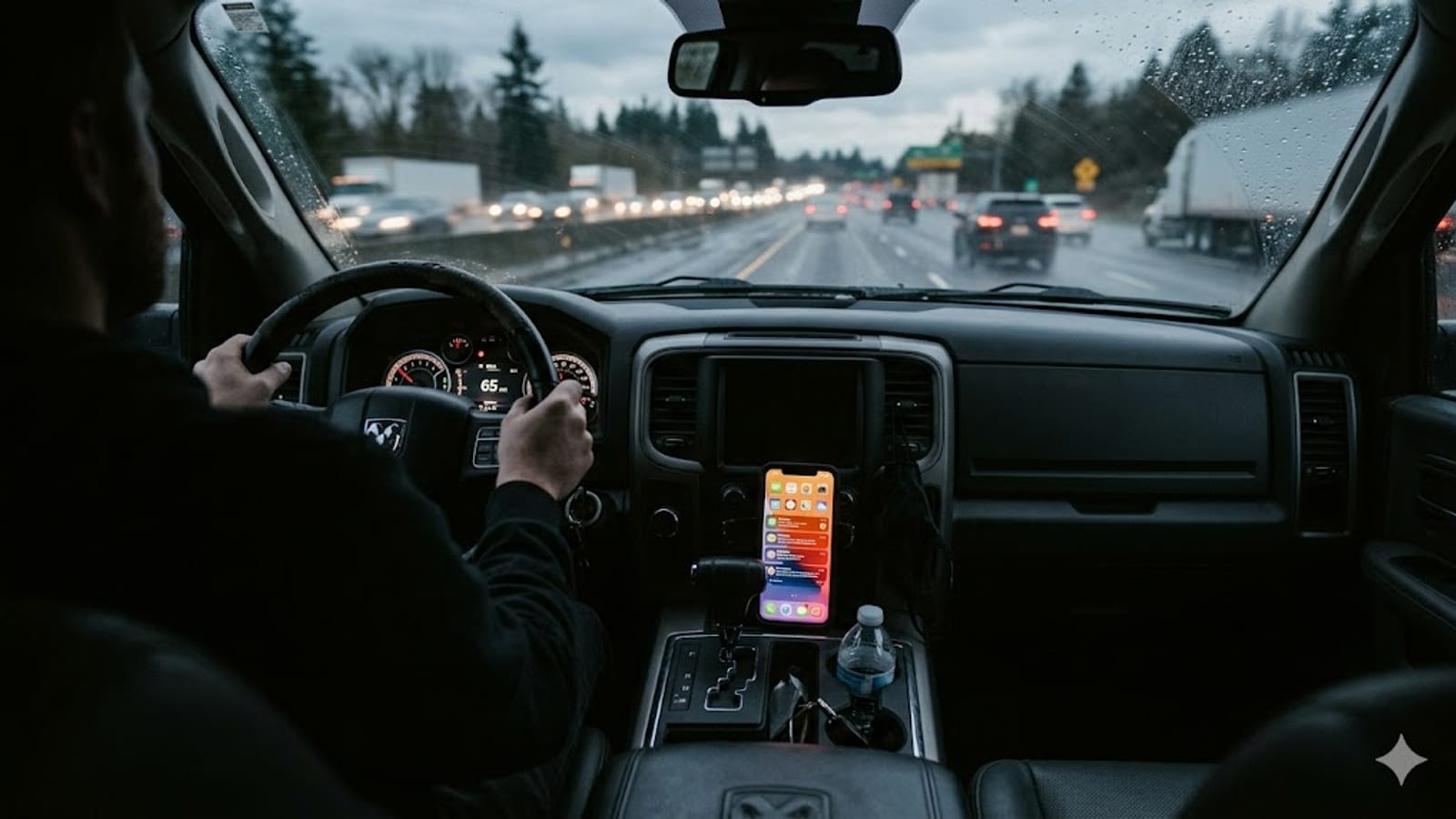
Distracted Driving and the Smartphone Generation: What the Data Says
Phones are the most visible driving distraction, but they aren't the only one. Here's how distraction causes crashes and what genuinely reduces it for new drivers.
By Drive Smart Academy Team
Distraction is one of the most-studied and most-preventable causes of crashes. The National Highway Traffic Safety Administration (NHTSA) attributes thousands of deaths each year to distracted driving, and younger drivers are consistently overrepresented in those numbers.
The reason isn’t that teens care less about safety. It’s that they’re newer to a task that demands constant attention — and they’ve grown up with a device engineered to capture it.
The “five-second” problem
A figure NHTSA cites often: reading or sending a text takes your eyes off the road for about five seconds. At highway speed, that’s roughly the length of a football field traveled essentially blind. For a driver still building the reflexes to scan, judge gaps, and anticipate hazards, five seconds of inattention is an enormous gap.
Three kinds of distraction
Safety researchers break distraction into three types, and phones manage to hit all three at once:
- Visual — taking your eyes off the road.
- Manual — taking your hands off the wheel.
- Cognitive — taking your mind off driving.
This is why “hands-free” is safer but not safe. A voice conversation still pulls cognitive attention away from the road, which is why many graduated-licensing programs ban all phone use for new drivers, not just handheld use.
What actually changes behavior
Lectures rarely work. What does:
- Make the default frictionless. “Do Not Disturb While Driving” silences notifications automatically. A phone in the trunk or glovebox removes temptation completely.
- Model it. Teens notice when the adults in their lives glance at a phone at a red light. Family rules that apply to everyone land better than rules that apply only to the new driver.
- Name the trade-off honestly. The message that sticks isn’t “phones are bad” — it’s “no message is worth the few seconds it takes your eyes off the road.”
- Build the habit early. Distraction-free driving is easiest to establish in the first months, before bad habits set in.
The goal isn’t fear. It’s a simple, automatic routine: the car moves, the phone waits.
Sources & further reading
Was this helpful?
Thanks — your feedback helps us improve.
Learn to drive the smarter way.
Real-road scenarios, a permit prep that actually sticks, and a parent dashboard that keeps everyone on the same page.
Get early accessKeep reading
The "100 Deadliest Days": Why Summer Is the Riskiest Season for Teen Drivers
Between Memorial Day and Labor Day, teen-involved crashes climb sharply. Here's why summer is so dangerous for new drivers — and what families can do about it.
Safety & TrendsWhy the First Year of Solo Driving Is the Most Dangerous
Crash risk for new drivers is highest in the first months after licensure, then falls fast. Understanding why points to exactly where families should focus.
Safety & TrendsNight Driving: The Hidden Danger in Teen Crash Statistics
Far fewer miles are driven at night, yet a disproportionate share of fatal teen crashes happen after dark. Here's why — and how to build the skill safely.