Phones and the Law: Why New Drivers Face Stricter Rules
Many states ban all phone use for young drivers, even hands-free. Here's how these laws generally work and the reasoning behind the tougher standard for teens.
By Drive Smart Academy Team
Phone laws for drivers are a patchwork — they differ by state, and they often differ again for young or newly licensed drivers. The general trend, tracked by the Governors Highway Safety Association (GHSA), is that teens face a stricter standard than adults. Understanding the categories helps families know what actually applies.
Phone and distracted-driving laws vary widely by state and change frequently. Confirm the current rules for your state — and your teen’s license stage — with the BMV/DMV.
The general landscape
Most states regulate driver phone use along a few lines:
- Handheld bans. Many states prohibit holding a phone while driving for all drivers, allowing hands-free use only.
- Texting bans. Texting while driving is prohibited for all drivers in nearly every state.
- Stricter rules for young drivers. Here’s the key part for teens: a large number of states ban all phone use — including hands-free — for drivers in the learner or intermediate (GDL) stage, or under a certain age.
That last category surprises people. A hands-free call is legal for an adult in many states but illegal for the new driver sitting next to them.
Why the tougher standard for teens
It comes down to two facts the research supports:
- Hands-free isn’t distraction-free. A phone conversation still pulls cognitive attention off the road, even with both hands on the wheel. For a driver whose scanning and hazard perception are still developing, that cognitive load is more costly.
- New drivers have the least spare capacity. Experienced drivers have automated the basics and can (imperfectly) absorb a little extra load. New drivers are already using most of their attention just to operate the vehicle.
So the law asks more of the drivers who can least afford the distraction — which, given the stakes, is exactly backwards from how it might first seem.
What this means in practice
- Know your state’s GDL phone rule specifically. “It’s legal for my older sibling” doesn’t mean it’s legal for a permit or intermediate-license holder.
- Penalties can affect the license itself. In some states, a distracted-driving violation during the probationary period can extend restrictions or delay full licensure — not just generate a fine.
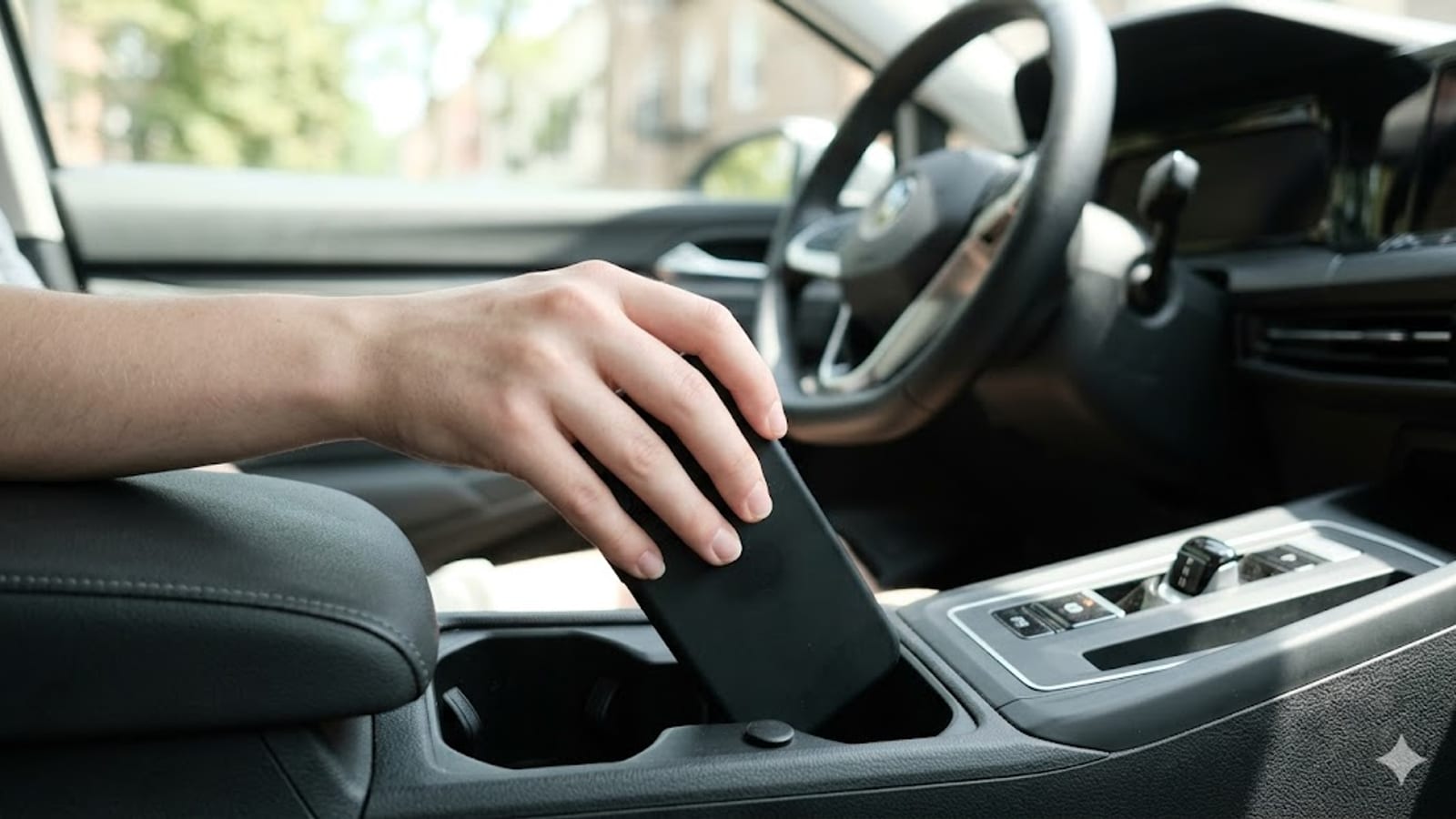
- The simplest compliance is also the safest. Phone on “Do Not Disturb While Driving,” out of reach. That single habit satisfies even the strictest GDL phone rule automatically.
The legal details vary, but the direction is consistent everywhere: for new drivers, the safest assumption is that the phone is off-limits until the car is parked.
Sources & further reading
Was this helpful?
Thanks — your feedback helps us improve.
Learn to drive the smarter way.
Real-road scenarios, a permit prep that actually sticks, and a parent dashboard that keeps everyone on the same page.
Get early accessKeep reading
What Is Graduated Driver Licensing (GDL)? A Plain-English Guide
Every U.S. state phases teens into full driving privileges in stages. Here's what the three GDL stages mean, why they exist, and how to think about them.
State LawsOhio's Teen Licensing Requirements, Explained
From the temporary permit to a full license, here's how Ohio walks teen drivers through graduated licensing — the permits, the hours, and the restrictions.
State LawsSame Idea, 50 Versions: How GDL Laws Vary by State
Every state uses graduated licensing, but the details differ a lot. Here's where the variation lives — and why it matters if your family moves or travels.